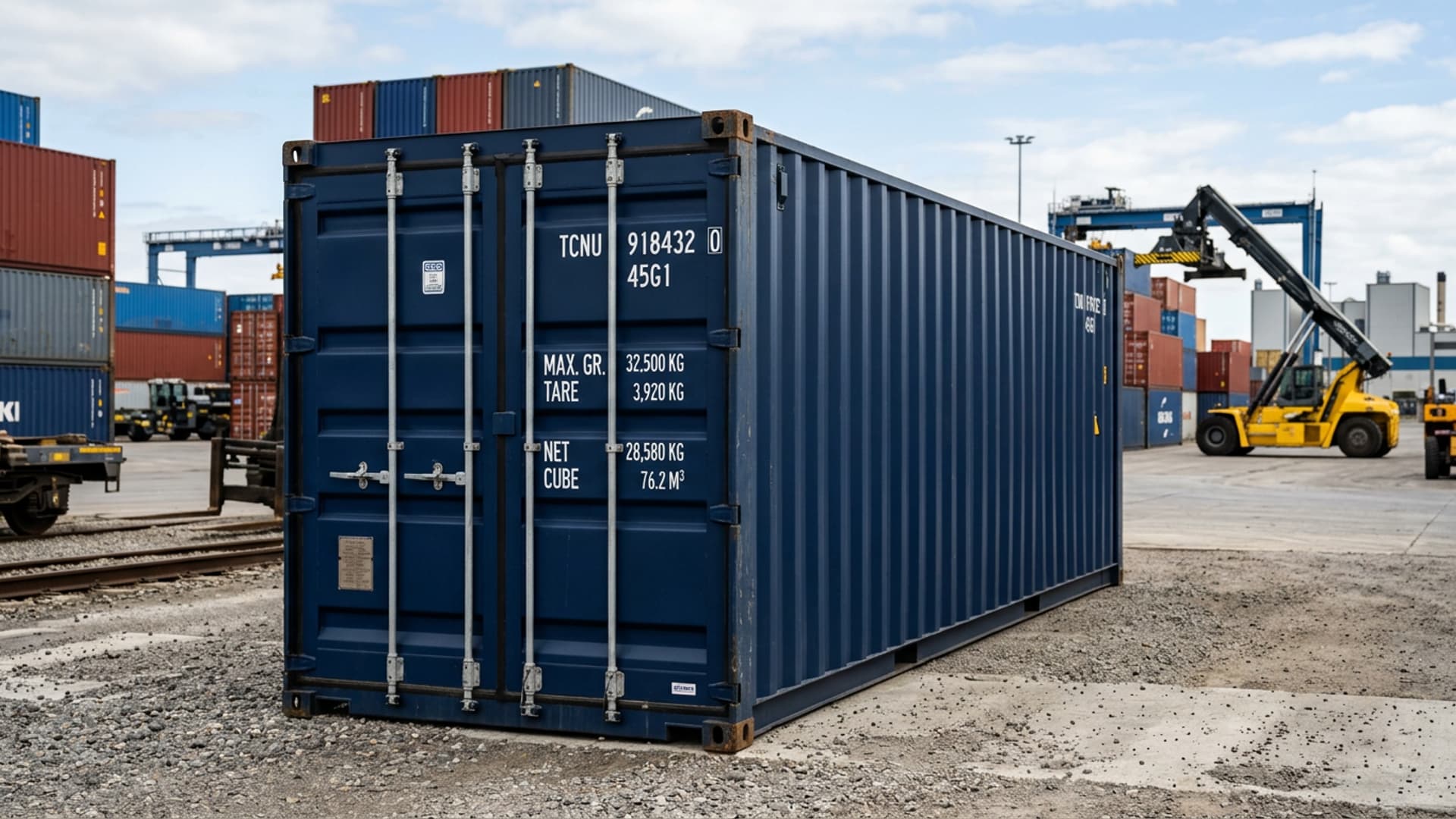
One-trip shipping container: the smart compromise
Decoding and prices for 2026. One-trip describes a container sold after one shipping journey. Check its documents, actual condition and handling marks. Its value depends on the quotation and your project requirements.
First-trip prices 2026
| Format | One-trip | Economy vs brand new |
|---|---|---|
| 20 feet dry | £2,142 – £4,095 | -15 % |
| 40 ft dry | £2,611 – £5,040 | -14 % |
| 40 ft high cube | £2,811 – £5,670 | -13 % |
| 20 ft reefer | £5,020 – £10,500 | -20 % |
| 40 ft reefer | £6,694 – £17,850 | -20 % |
Why this compromise exists
Some of these containers are bought by intermediaries upon arrival in Europe after a single trip. The container is no longer technically new (it has been used), but it arrives in an aesthetic and structural condition almost identical. One-trip describes a container sold after one shipping journey. Check its documents, actual condition and handling marks. Its value depends on the quotation and your project requirements.
Prices, lead times and availability depend on suppliers, depots and site access in the United Kingdom. Compare detailed local quotes before relying on a budget or delivery date.
How to recognise a genuine one-trip: the 5 markers
Some suppliers present Grade A used containers as 'one-trip' to justify a higher price. Here are the 5 technical checks that allow you to make a clear distinction.
1. CSC plate: recent manufacturing date
The CSC plate, fixed on the left door, indicates the month and year of manufacture. For a true one-trip container: manufactured within less than 18 months. Beyond 2 years, it is no longer technically a 'one-trip' even if the supplier calls it so. The plate is the official irrefutable document.
2. Door seals: soft rubber, new
The seals must be soft to touch, uniformly black, without cracks or deformation. On a one-trip container, they have undergone only one compression of 30-45 days (sea transport). On a used container, several opening/closing cycles have hardened and sometimes cracked them.
3. Wooden floor: limited and uniform marks
The wooden floor (treated with bifenthrine) should show few traces of straps or pallets — only those from a single loading. No uniform wear along the entire length, no multiple stains in several areas, no residual odours (chemical, rancid, damp).
4. Exterior paint: uniform and complete
Factory paint visible throughout, without touch-ups. A few superficial transport scratches are normal, but no deep flaking or obvious touch-ups. A one-trip container that has been repainted is suspicious — it is likely a disguised used container.
5. Customs history / documentation
A serious professional supplier keeps the documentation: shipowner's import invoice, date of arrival at the European port, unloading port, cargo transported (if known). Ask for at least the purchase invoice of the container — if the supplier refuses or pretends it is a 'commercial secret', justified doubt.
Simple practical test on site: open both doors fully and close them without forcing. On a one-trip container, they shut naturally with all four locks engaging without resistance. On a used container, one or more locks require an extra push. This is a direct sign of the number of usage cycles.
Frequently Asked Questions
What is a one-trip container?+
Prices, lead times and availability depend on suppliers, depots and site access in the United Kingdom. Compare detailed local quotes before relying on a budget or delivery date.
What are the concrete differences with a new one?+
Ask for written warranty terms, including duration, covered parts and exclusions.
How much do I save compared to a new one?+
15 to 20% generally. Example: a brand new 40 ft high cube for £3,682 vs one-trip at £3,079 — saving £602 on a container you won't notice the difference in use. On a 40 ft reefer: savings of £1,339 – £2,008, even more significant.
For which uses do I choose one-trip?+
Almost all except two: (1) high-end commercial display with customer viewing from 1 m away from the container (prefer new for image), (2) intensive maritime export where the CSC seal must be as recent as possible. In all other cases — storage, workshop, site cabin, residential conversion, tiny house, pool — one-trip is the best quality/price compromise.
How do I recognise a genuine one-trip vs a Grade A used container presented as such?+
Three checks. One: the CSC plate must show a recent manufacturing date (less than 18 months). Two: door rubber seals should still be flexible and new. Three: inside should be clean, without signs of multiple load/unload cycles. If in doubt, ask the supplier for the container's customs history — serious professionals have it.
Also worth seeing
One-trip 20-foot container: near-new appearance, reduced price
One-trip 20-foot container (one-trip): near-new appearance, £2,142 – £4,095. Save 10-15% vs new, same quality. Get 5 quotes in 48h.
40-foot one-trip shipping container: single maritime journey, near-new appearance
40-foot one-trip standard or high cube container: £2,611 – £5,670. Brand new CSC plate, save 10-15% vs new, available in Felixstowe/Southampton.
One-trip high cube: new appearance, 30 cm extra height, reduced price
High cube one-trip 40 feet: £2,811 – £5,670, brand new CSC plate, interior height 2.69 m, savings of 10-15% vs high cube new. Ideal for shipping container home.
One-trip refrigerated container: reefer one-trip, generator tested
One-trip reefer 20', 40' : £6,359 – £18,900. New or near-new fridge group, save 20-30% vs new reefer. Available in Felixstowe/Southampton.
Brand new container
The 4 cases where brand new makes sense, manufacturers, lead times.
Used container
Classes A/B/C, resale circuit, where to buy.
Guide: new vs used
TCO over 10 years, recommendations by use case, detailed table.
Compare quotes for your container
Up to 5 quotes from selected suppliers subject to supplier availability.