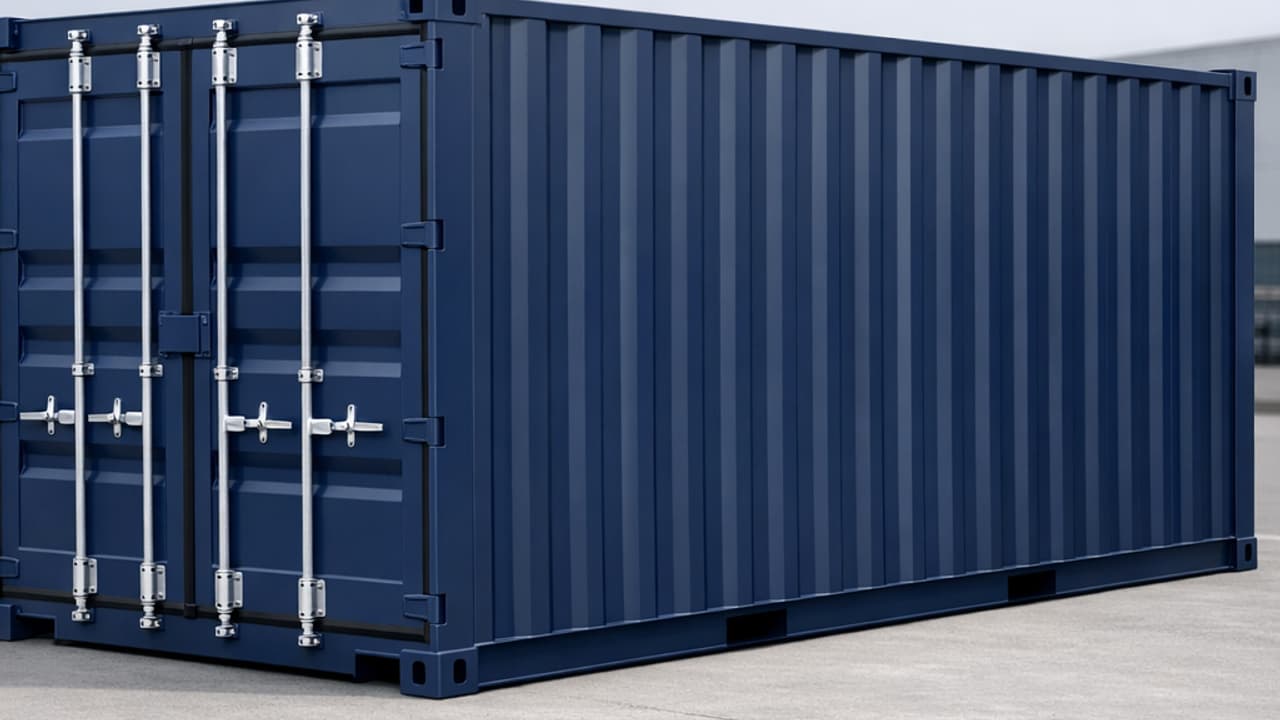
Short-term container rental
Need a container for a few days, weeks, or months? Delivery in 48 to 72 hours, decreasing rates based on duration, hassle-free return. We explain the 2026 tariffs and when it makes sense.
Short-term tariffs 2026
| Duration | 20 feet dry | 40 ft dry | 20 ft reefer |
|---|---|---|---|
| 1 week | £74 – £137 | £105 – £189 | £210 – £420 |
| 2 weeks | £116 – £210 | £168 – £294 | £347 – £683 |
| 1 month | £147 – £263 | £210 – £347 | £473 – £945 |
| 2 months | £284 – £504 | £410 – £672 | £893 – £1,785 |
| 3 months | £410 – £735 | £588 – £987 | £1,260 – £2,520 |
Rental price excluding delivery and return (£315 – £735). Delivery often represents the largest cost for shorter durations — factor this into your overall budget.
When to choose short-term rental?
- Moving transition — 2 to 8 weeks between two residences. Temporary storage of furniture.
- Home renovation — renovation, painting, transformation: empty a room or the garage.
- One-off Event — festival, fair, filming, countryside wedding: 3 to 21 days.
- Logistics Crisis — unexpected peak of activity, stock overflow, supplier delivery delay.
- Trial Before Purchase — some customers rent for 2-3 months to validate usage before committing to a long-term purchase.
Contract Extension: How Does It Work?
Contract extension is a common practice in short-term rental. The most frequent reasons are an overrun on the construction site, a delayed move, or an event that extends beyond its initial timeframe. Here's how rental companies handle these situations.
Short Extension (+1 to 4 weeks)
The current duration tier rate is applied to the extension period. Example: for a one-month package extended by two weeks, the additional fortnight is charged at a pro-rata of the monthly rate. Must be announced at least 72 hours before the return date to avoid lost delivery fees (£105 – £315 flat loss).
Medium Extension (1-3 months)
Automatic switch to the higher tariff level (average duration: £105 – £189 for a 20-foot container). The suppliers accept without resistance as it smooths their logistics rotation. A simple addendum can be signed by email. From 3 months, the supplier may require an adjustment of the deposit.
Long-term extension (3-12 months)
Switch to a long-term contract with reduced monthly rate (£84 – £147 for a 20-foot container), notice period of 30-60 days. At this stage, renegotiate the price — you have earned long-term customer status. Systematically request a discount of 5 to 15 per cent compared to the public catalogue.
Beyond 12 months: reassess the decision
If your extension takes you beyond 18 months of rental, reconsider the purchase option. For a Grade A used 20-foot container at £2,625 – £2,625, buying becomes more economical than continuing to pay £105 – £105 per month. Some suppliers offer to convert your lease into a purchase with partial deduction of paid rentals (LOA, lease with an option to buy).
TCO: when short-term rental becomes more expensive than medium or long term?
The short-term tariff is structurally higher per month than the medium or long-term rates. Here’s at what point it becomes profitable to negotiate a higher tariff level — simulation on a 20-foot dry container, long-term rate at £105 – £105 per month.
| Effective duration | Cumulative short term | Cumulative medium / long term | Economic switch point |
|---|---|---|---|
| 1 month | £230 | — | Short stay OK |
| 2 months | £460 | — | Short stay OK |
| 3 months | £690 | £420 (average £140 × 3) | −£270 (−39 %) |
| 6 months | £1,380 | £840 (average) | −£540 (−39 %) |
| 12 months | £2,760 | £1,680 (average) | −£1,080 (−39 %) |
| 12 months (long term) | £2,760 | £1,200 (long term 100 × 12) | −£1,560 (−57 %) |
Practical rule: as soon as you know your need will exceed two months, sign directly for medium-term rather than renewing short-term contracts. From six months onwards, negotiate long-term rates. Many SMEs unnecessarily pay full short-term rates because they do not anticipate the actual duration of their needs.
Frequently Asked Questions
What is 'short term' in container rental?+
Generally less than 3 months. Some suppliers segment more finely: very short (1-7 days, daily pricing), short (1-4 weeks), medium-short (1-3 months). Beyond 3 months, it moves to medium-term with more advantageous monthly rates. The commercial minimum is often one week, sometimes 48 hours for urgent needs.
Why is the short term more expensive per month?+
The supplier must cover the logistics of delivery + return over fewer months. Transport round-trip £315 – £735, handling, cleaning between rentals, availability of a module ready at the depot: these fixed costs are amortised over fewer months, hence higher monthly rates. Example: 20ft dry £84 – £147 for long-term rental, £242 – £242 for short term. The difference is justified financially.
How much does it cost for just one week?+
For a 20ft dry container: £74 – £137 per week (excluding round-trip delivery £315 – £735). For a 40ft container: £105 – £189/week. For a reefer: £210 – £420/week (excluding generator). Note: for ultra-short-term rentals, the cost of delivery can exceed the rental fee — to be factored into economic assessment.
In which cases is short term rental profitable?+
Three main scenarios. Delayed relocation: 2 to 6 weeks between two homes. Home renovation: emptying a room for 3 to 8 weeks. Event: 3 to 21 days. Seasonal peak activity: 1 to 3 months. Beyond cumulative 18 months, purchasing becomes more interesting — but between 2 days and 18 months, short-term rental solves specific needs without immobilisation.
Can a short term rental be extended during the contract?+
Yes, almost always. The supplier simply applies the rate of the next duration tier on the extension (or medium-term rate if you exceed 3 months). Extending one additional week typically costs £74 – £137 for a 20ft container; this decision should be made before the return date to avoid delivery retraction fees.
Urgent need?
Standard delivery in 48 hours, urgent delivery in 24 hours. Compare 5 quotes.