Everything you need to know about container rental
For a six-month construction site, a prolonged move, an overflowing stock or an outdoor event: renting a container is significantly cheaper than buying one — provided that you understand what you are signing up for. Here are the real rates, pitfalls to avoid and the simple rule to decide between renting and purchasing.
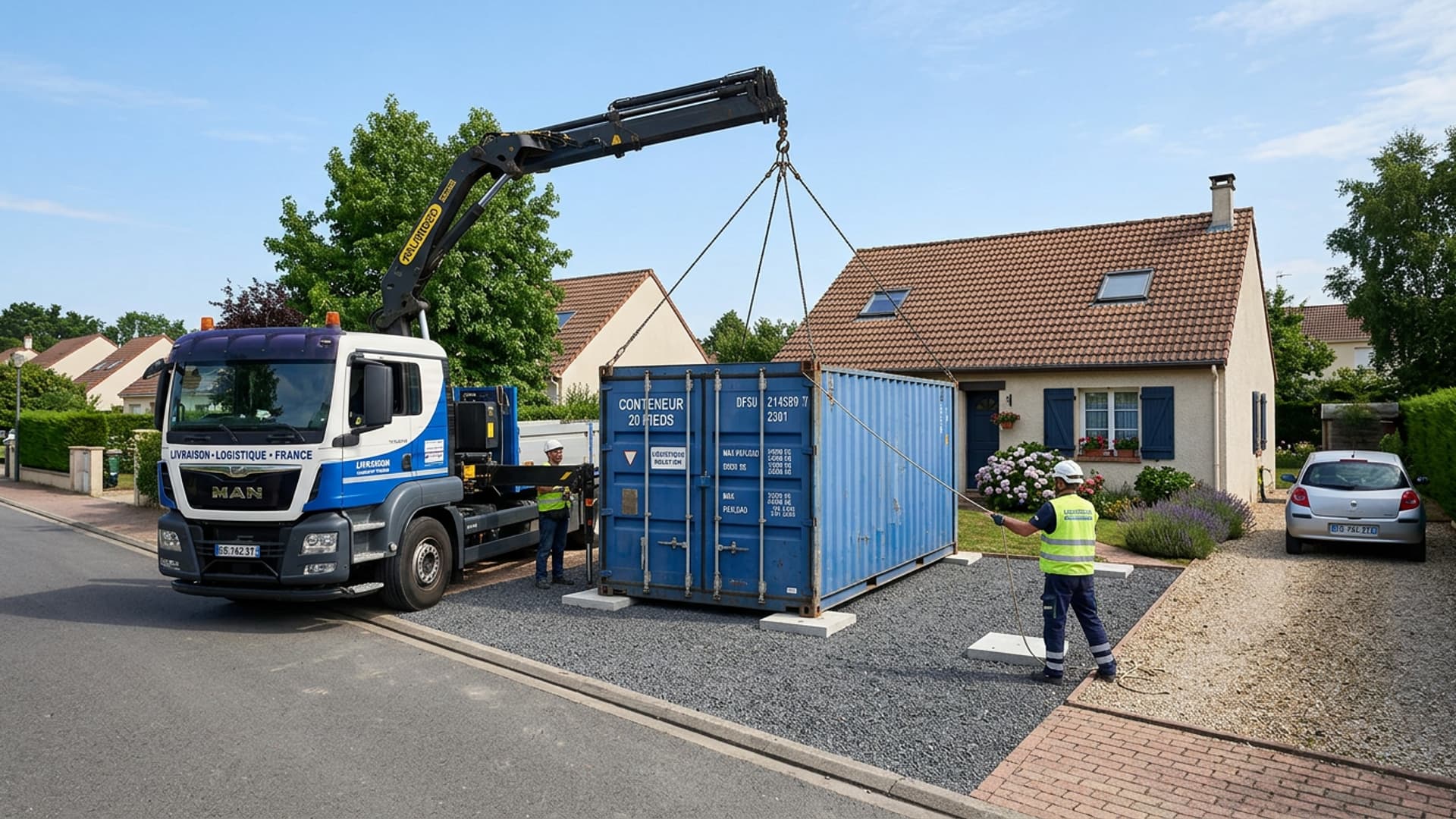
Who rents containers and why?
Container rental is for anyone or company with a temporary need — typically from several weeks to two years. Use cases rarely overlap: individual renovating their home who needs to empty their garage, business opening a new production line, event organiser needing refrigerated storage for three days, construction site manager setting up accommodation units. Common thread: nobody wants to buy an asset they will have to resell in six months.
Logistically speaking, rental is slightly more expensive per day than buying by the cubic metre — but you avoid financial immobilisation, resale and maintenance. And most importantly, you have total flexibility: add a second container mid-project, swap if yours gets damaged, extend the duration — all of this can be negotiated easily.
The four main uses for rental
Temporary Storage
Moving, stock overflow, home renovations, archives. The 20-foot container covers most needs, starting at £70/month long term.
Construction Site
Tool storage, materials, or site accommodation for teams. Delivery in 48 to 72 hours in most urban areas. Monthly billing.
Refrigerated (reefer)
Event support, high activity periods, labs, pharmacies. Three-phase power connection at 380 V. Starting from £380/month.
Events
Festivals, trade shows, pop-up stores, film shoots. Short term (7 to 30 days), express delivery. Pricing per package based on zone and dates.
Hire by container size
Rental Rates in 2026
The monthly price depends on four factors: the length of commitment (the longer it is, the cheaper per month), the type of container (dry, reefer, converted), the time of year (construction tends to saturate everything in spring) and the geographical area (delivery within Paris city limits costs more than to Rouen or Valence).
| Type | Short term (< 3 months) | Medium Term (3-12 months) | Long term (12+ months) |
|---|---|---|---|
| 20ft storage container | £147 – £263/month | £105 – £189/month | £84 – £147/month |
| 40 feet storage | £210 – £347/month | £168 – £263/month | £137 – £210/month |
| Reefer 20' | £735 – £1,260/month | £578 – £893/month | £473 – £735/month |
| Site bungalow | £294 – £473/month | £231 – £368/month | £189 – £305/month |
Rates observed on the ContainerEU network in Q1 2026, excluding delivery and options. Delivery round trip costs £263 – £630 depending on the zone, and a deposit of £525 – £2,625 is generally requested.
Rent or buy: the 18-month rule
We are asked this every day. Here is the honest calculation with real figures.
pages.rentalContainer.rentVsBuy.paragraph1
The same long-term rental need would cost about £100 per month, or £2,400 over 24 months. Therefore, renting is significantly more expensive beyond 18 months. Below this period, the hidden costs of resale (advertising, negotiation, transport) tip the advantage towards renting.
Exceptions to the rule: for a refrigerated container, maintenance of a cooling unit costs £680 to £1,300 per year — rental remains advantageous longer. For a container that will be heavily modified (cutting, drilling, custom painting), purchase is mandatory as a supplier would refuse these modifications.
The 6 points to check before signing
- Condition at delivery (flooring, waterproofing, doors, seals) — carry out a signed condition report with photos, essential for return.
- Termination conditions : notice period (often 30 days), early termination penalty (variable), take-back arrangements.
- Deposit : amount, form (cheque, imprint), refund time frame, retention conditions.
- Insurance : who insures the shipping container during rental? Generally the tenant via their professional liability or home insurance, to be verified in advance.
- Modification Possibilities : drilling, painting, interior shelving. Most rental companies prohibit structural modifications. To anticipate if your use requires it.
- Guaranteed Delivery Time : on large construction sites, a one-week delay can be costly. Demand written commitment.
Choosing the Right Supplier Matters More Than Price
For rentals, the monthly price difference between two suppliers is often small (10 to 20%). What makes the difference is the quality of the delivered container, adherence to deadlines, contractual flexibility, and quick response if something goes wrong. Our network selects suppliers based on these criteria — we track their performance over time.
Frequently Asked Questions
What is the cost of renting a shipping container in France?+
For a 20-foot dry storage, monthly rental varies from £84 – £147 for long-term (12 months or more), £105 – £189 for medium-term (3 to 12 months), and £147 – £263 for short-term (less than 3 months). A 40-foot container costs approximately 40 to 60% more. For refrigerated units, expect £473 – £735 depending on the format and period.
What is the Minimum Rental Duration?+
Most suppliers accept a minimum of one month. Some go down to seven days for events but with a significant short-term premium (daily rate two to three times higher than the pro-rated monthly rate). Beyond 18 to 24 months of rental, it becomes systematically more profitable to buy.
Who pays for the delivery of the rented container?+
Delivery is charged in addition to the monthly rent by the tenant. Count on £263 – £630 round trips for an accessible area, more for a remote or difficult-to-access location (Corsica, mountainous areas, very dense city centre). The dismantling at the end of the contract is included in this package with most suppliers.
Is a deposit required?+
Yes, almost always. The deposit covers the resale value of the container in case of damage. It varies from £525 – £2,625 depending on type and condition. Paid by cheque or bank imprint, refunded within 15 to 30 days after final inspection.
Lease or buy: how to decide?+
Simple rule: for a need under 18 months, leasing is almost always more advantageous. Between 18 and 24 months, it's equivalent. Beyond 24 months, buying is more profitable (and you keep an asset that can be resold at 50 to 70% of its purchase price after 10 years). The calculation changes for refrigerated containers (costly maintenance) and fitted-out containers (installation costs amortised over time).
Can one rent a fitted-out container (office, sanitary unit)?+
Yes. This is actually a very common use on construction sites: office bungalows, changing rooms, sanitary units, canteens. Price of £189 – £473 according to equipment and duration. See our dedicated page for site accommodation units and bungalows.
What happens at the end of the contract?+
The supplier organises the pick-up: delivery of a truck, emptying of the container (at your expense), loading, return to the depot. A final inspection is carried out. If the container is returned in good condition, the deposit is released within 15 to 30 days. If damages are noted (damaged floor, warped doors, unplanned drilling), repair costs will be deducted.
Can one change containers during the contract?+
Yes, this is what we call an 'exchange'. Very common on long construction sites (24 months +) when a container gets damaged or needs change (for example, switching from a 20-foot to a 40-foot container). The exchange usually happens without fees if you stay within the same range, with a logistics fee of £210 – £420 otherwise.
Also worth seeing
Container rental prices: barometer 2026
Monthly rates for all formats, ancillary costs (deposit, delivery round trip), rule purchase vs. rental.
Buying a container
Everything about the prices and types of new, one-trip, and used containers.
Site cabins & site bungalows
Construction modules, changing rooms, sanitary units, offices, dining halls.
Converted containers
Tiny house, office, shop, pool, snack bar: custom transformations.
Find the right rental company near you
A form, up to 5 proposals, you choose. Free of charge.