Shipping container for logistics and e-commerce
Stock overflow, temporary extension, multi-site, seasonal peaks: the shipping container offers to the logistician what no brick-built warehouse can — elasticity. We decode configurations, costs per m³, and winning use cases.
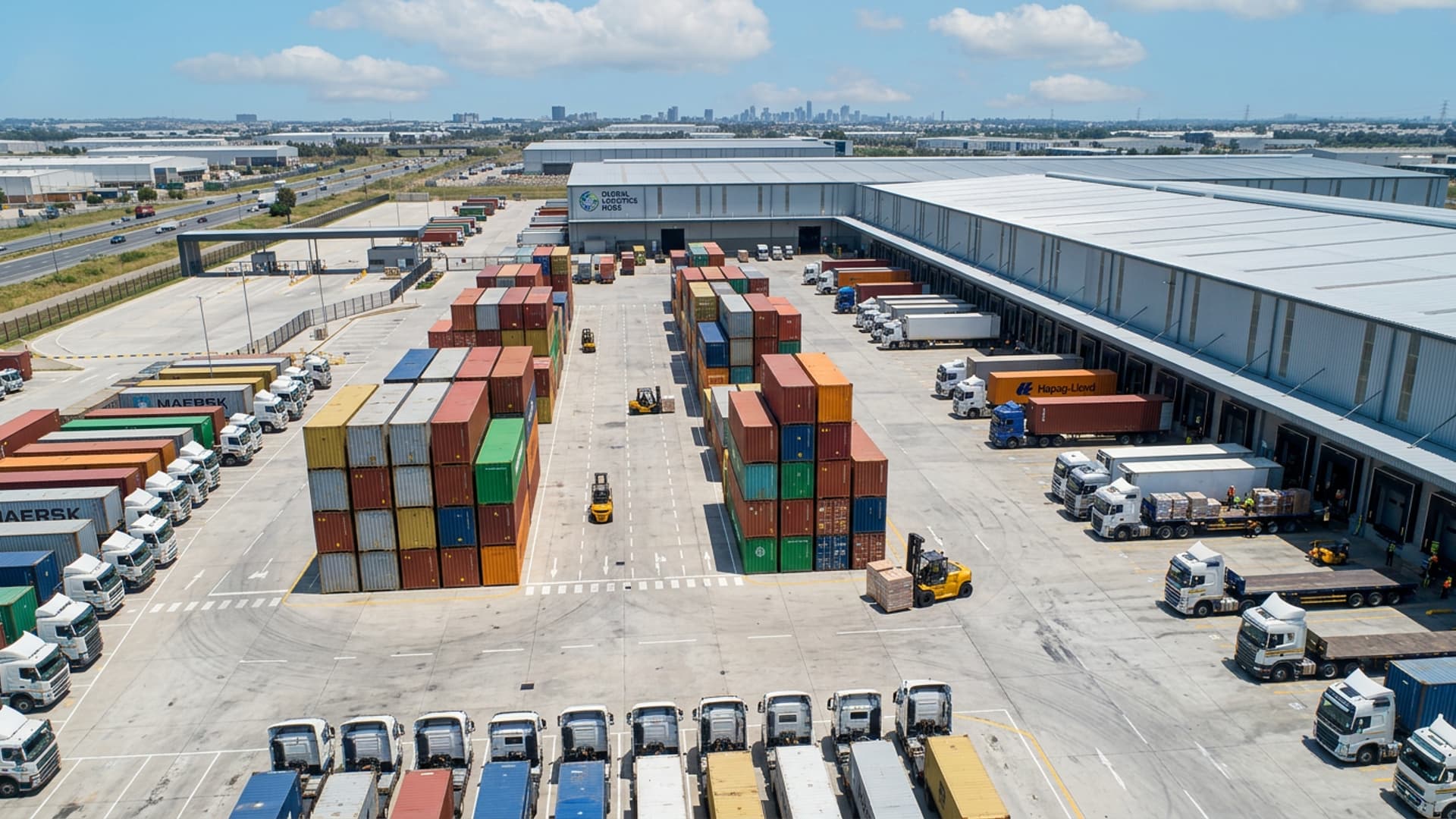
The 3 most profitable usage patterns
Nearby platform satellite
1-2 shipping containers placed next to a main warehouse. Used for bulky products with low demand, safety stock, customer returns awaiting processing. Avoids wasting expensive floor space in the warehouse.
Seasonal peak back-up
3-6 shipping containers rented 3-4 months before Black Friday / Christmas to absorb additional storage surface area. Demounted as soon as normal activity resumes. Typical budget £420 – £840/month per container according to format.
Multi-site pre-positioning
A container at each secondary depot to pre-position regional stock. Reduces delivery times to J+1 without investing in a network of owned warehouses. Model used by scale-up e-commerce businesses.
Cost per m³: container vs warehouse
| Solution | Monthly cost | Usable volume | Cost/m³/month |
|---|---|---|---|
| 20-foot container lease (long term) | £105/month | 33 m³ | ~3,0 € |
| 40-foot container lease | £173/month | 67 m³ | ~£2.5 |
| 40 HC Rental | £194/month | 76 m³ | ~£2.4 |
| Class B Warehouse (average FR) | ~£7/m²/month | — | ~£1.3/m³* |
| Urban Self-Storage | ~£3/m²/month | — | ~£0.5/m³* |
* Calculated m³ equivalent based on an average ceiling height of 5 m for a Grade B warehouse, and 2.5 m for self-storage units. The container is competitive compared to self-storage and slightly more expensive than a large-volume warehouse but without minimum surface area requirements, long-term lease signing or start-up costs.
Frequently Asked Questions — Logistics Sector
Why use a shipping container for logistics instead of a traditional warehouse?+
Three reasons. (1) Flexibility — you can add or remove containers in 48 hours, whereas a warehouse requires 6-18 months to scale the surface area. (2) Cost — renting a 40-foot container costs £137 – £210/month for 67 m³, which is less than £3/m³/month. (3) Mobility — if your platform changes, the container follows you. Suitable for seasonal peaks, temporary extensions, and overflow.
What volume can be stored in a 40-foot container?+
22 EUR pallets on the ground, 44 if stackable on two levels. For industrial pallets (1.20×1.00 m), 20 on the ground and 40 on two levels. Load capacity is 26,680 kg. A metal shelving line optimises: 3 levels × 11 places = 33 picking spots per container. A 20-foot container holds exactly half.
How to organise a logistics container pool?+
Three common patterns. (1) Satellite: 1-2 containers near a large platform for offloading bulky products rarely needed. (2) Peak backup: 3-6 containers rented 3-4 months before Black Friday/Christmas to absorb volume spikes. (3) Multi-site: 1 container per secondary depot to pre-position regional stock. The mix depends on your seasonality.
Can a shipping container be heated or air-conditioned?+
A standard dry shipping container is neither heated nor air-conditioned. For heat-sensitive products (cosmetics, electronics), internal insulation + industrial air conditioner = additional £3,150 – £8,400 cost at purchase. For fresh food, go directly to a reefer (refrigerated container). For pharmaceuticals with temperature tracking, mandatory reefer with temperature log.
And for growing e-commerce?+
Typical scenario: an e-commerce business that doubles its turnover in year N+1 and whose small warehouse becomes insufficient. Temporary solution 6-18 months: rental of 2-4 40-foot containers as an extension to the main site. Time savings vs moving to a larger space (6 months of search + signing + fit-out). Budget £420 – £840/month per container.