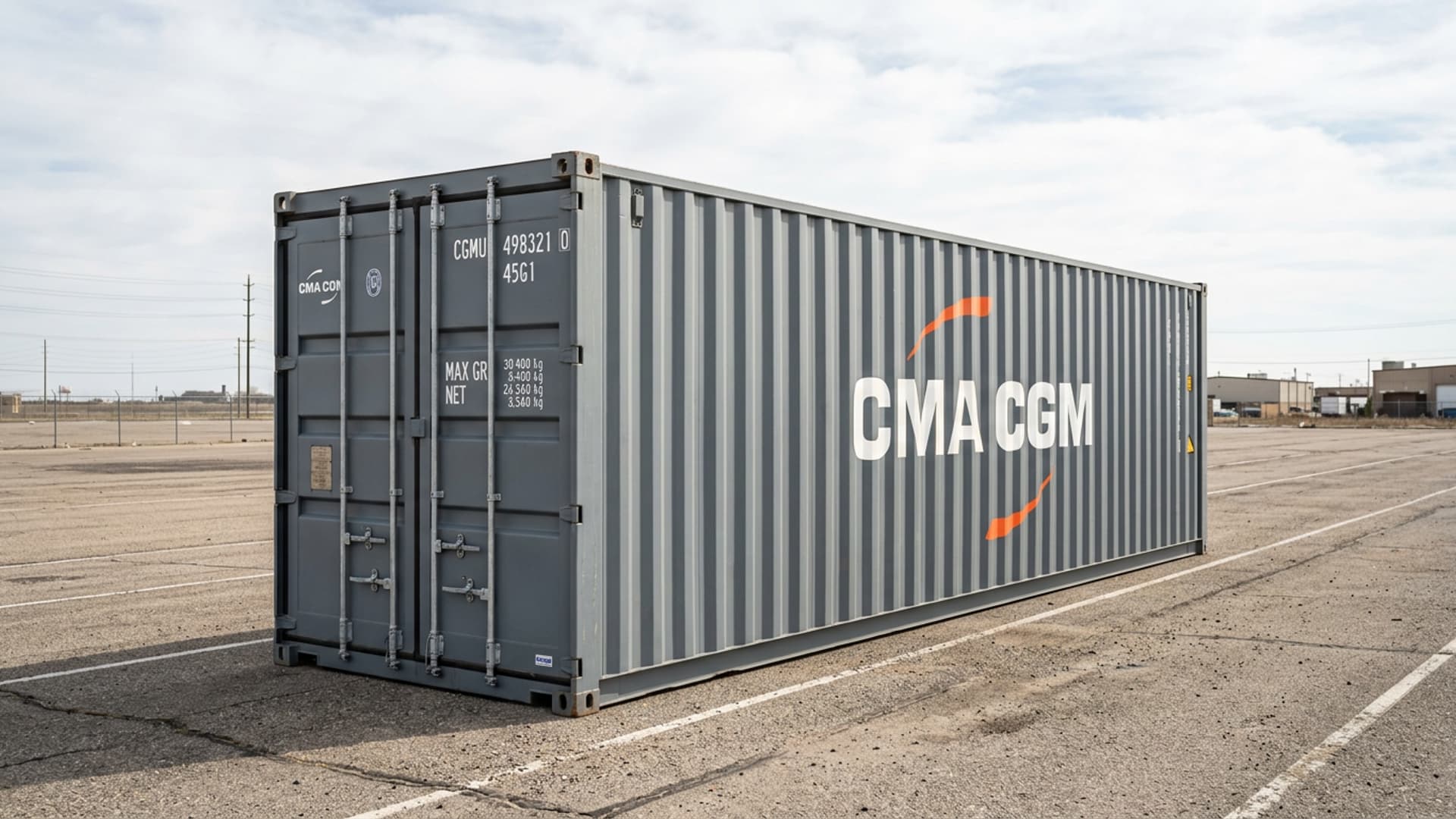
The high cube: the extra 30 cm that make all the difference
A high cube (HC) is a 40 or 45-foot container with an additional 30 cm in height — from 2.39 m to 2.70 m interior. While seemingly insignificant on paper, it becomes decisive when converting living spaces, offices, shops, or comfortable site accommodation units. Explanation.
Key Features
- External length
- 12,192 m
- External width
- 2,438 m
- External height
- 2,896 m
- Internal Height
- 2,697 m
Dimensions: standard vs high cube
| Characteristic | 40 feet standard | 40 feet HC | 45 feet HC |
|---|---|---|---|
| External length | 12,192 m | 12,192 m | 13,716 m |
| External width | 2,438 m | 2,438 m | 2,438 m |
| External height | 2,591 m | 2,896 m | 2,896 m |
| Internal Height | 2,390 m | 2,697 m | 2,697 m |
| Internal volume | 67 m³ | 76 m³ | 86 m³ |
| Internal floor area | 28,3 m² | 28,3 m² | 31,9 m² |
When to choose high cube?
- Housing — A high cube leaves more allowance for insulation, flooring and ceiling. Choose using calculated finished height and the requirements for the actual use; high cube dimensions alone do not make a space compliant for occupation.
- Office, commerce, ERP — Energy, ventilation and safety requirements depend on the country, building category and use. Have a professional design the insulation and thermal-bridge treatment under the applicable local rules. In the United Kingdom, check the use, location and required permissions with the local authority before ordering. Applicable framework: England / Wales / Scotland / Northern Ireland: planning permission; building regulations / building standards. Floor area alone does not determine whether a container may be installed.
- Prestige site cabin — for long-term construction sites where team comfort is a priority, opt for a fitted-out high cube container.
- Storage of bulky products — machines, furniture, palletised goods stacked high: an additional 30 cm can fit one more line.
- Standard is sufficient for — classic pallet storage, workshop, maritime transport of non-bulky goods.
Available RAL colours
Frequently Asked Questions
What is the difference between a standard 40 feet and a high cube?+
The height only. Standard dry: 2,591 m exterior / 2,390 m interior. High cube: 2,896 m exterior / 2,697 m interior. That is a difference of 30 cm. The length (12,192 m) and width (2,438 m) are identical. Empty weight slightly higher for the HC (+150 to +200 kg). Interior volume 67 m³ (standard) vs 76 m³ (HC).
Why does height make such a big difference?+
In a standard container, once the interior insulation is installed (80 to 100 mm of material + finish coating), only 2.20 to 2.25 m of habitable height remains. This is barely sufficient and uncomfortable over time. With a high cube, after lining, you retain 2.50 to 2.55 m — a comfortable ceiling height, close to that of a typical living space.
Does a 45 feet high cube exist?+
Prices, lead times and availability depend on suppliers, depots and site access in the United Kingdom. Compare detailed local quotes before relying on a budget or delivery date.
How much does a high cube cost in 2026?+
40 feet HC new: £3,012 – £6,510. One-trip: £2,811 – £5,670. Grade A used: £2,142 – £4,410. Grade B: £1,740 – £3,675. Grade C: £1,406 – £3,045. Rare as new for 45 feet HC (on order), second-hand £2,811 – £6,825. Delivery to add £420 – £1,155 (additional height constraint).
Mind the height during transport?+
Have the carrier confirm the actual loaded vehicle height and route restrictions. Check bridges, cables, access and local rules; container height alone does not establish clearance.
Also worth seeing
40 feet standard
For storage and transportation.
Converted container
Tiny house, office, retail, pool.
Tiny house container
Minimalist living, budget-friendly, step-by-step guide.
High cube container hire
Temporary need? Compare the monthly rates of a high cube from £100,406/month.
45ft container
The longest high cube: 13.7 m, 86 m³.
Need a high cube?
Up to 5 quotes subject to supplier availability, delivery throughout the UK.