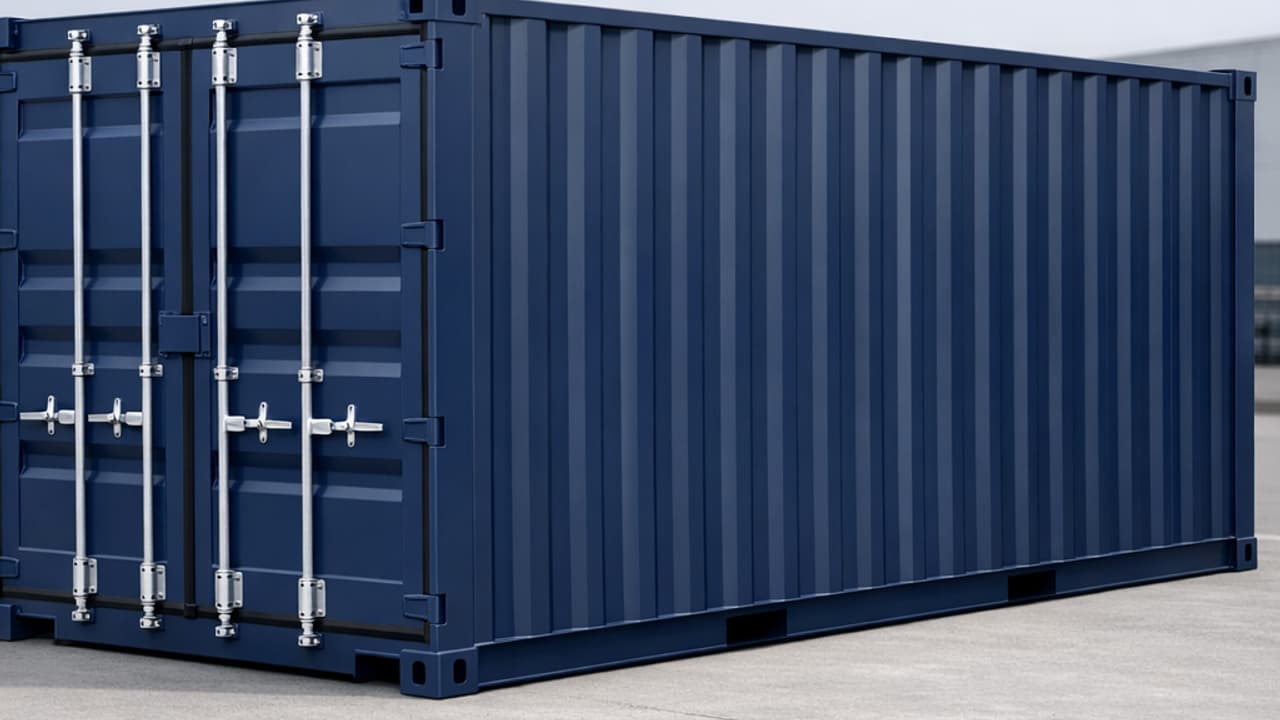
Storage containers: choose usable space on your site
Keep furniture, tools or goods close by, on a site suitable for delivery and positioning. Choose according to access, layout and the condition of the container, then compare purchase or hire quotes.
Store on your site or in an off-site storage unit?
An on-site container can suit you if you have space and need frequent access to your belongings. You arrange access, monitoring and storage conditions. Without a suitable site, compare an off-site storage unit: opening hours, access, environment and included services.
Compare costs over your planned period: purchase or hire, delivery, unloading, equipment, maintenance and any collection. Resale remains an assumption. When hiring, check the minimum term, deposit and return charges. No set number of months automatically makes buying better value.
10, 20 or 40 ft: choose around your layout
The total volume is not the amount you can fill while keeping everything accessible. Allow for an aisle, door opening, shelving and handling. Measure the largest item that needs to pass through the door.
Indicative purchase prices exclude VAT, delivery, unloading and equipment; confirm in the quote.
20 ft dry container
Approximately 33 m³ · 13.8 m² of internal floor space
£904 – £2,363
Furniture, boxes or tools. Plan shelving and the aisle around the shelves and items.
40 ft dry container
Approximately 67 m³ · 28.3 m² of internal floor space
£1,205 – £3,150
Bulky stock, long equipment or seasonal storage. Put frequently used items near the doors; keep a passage to the back.
Consider a 10 ft container for a compact store or a restricted site. Check dimensions and delivery access: a shorter container does not make every plot accessible. View the 10 ft container
Check the container before choosing equipment
Check the roof, walls, seals, doors and floor; ask for recent photos. For a used container, clarify repairs and odours before choosing equipment.
Closing mechanisms and lockbox
Check that the doors close properly and the padlock fits. A lockbox restricts access to the padlock without guaranteeing protection against break-ins. Consider site access control and monitoring too.
Moisture and ventilation
A container with no water ingress can still suffer condensation. Store dry goods and keep vents clear. Discuss suitable measures for sensitive items: vents alone do not guarantee dry storage.
Floor and loads
Look for soft spots, moisture and damage. For a heavy machine, provide its weight and contact area: the permitted load and any reinforcement must be checked for that unit.
Shelving and handling
Check the shelves’ stability, load rating and fixings while keeping the aisle clear. For a trolley, ask for a ramp suited to the threshold, ground and loads.
Prepare a quote that fits your storage needs
Include a sketch and photos to clarify the size, equipment and delivery.
List the goods and access needs
List the largest item, heavy loads, moisture-sensitive goods and access frequency. Draw the shelving and aisle; keep frequently used items accessible.
Show the site and delivery position
Photograph the entrance, lorry route, overhead obstacles and final position. Have manoeuvring space, ground bearing capacity, supports and unloading checked, beyond just the container dimensions.
Separate the quote items
Separate condition, equipment, delivery, unloading and taxes. For hire, add rent, deposit, term and collection. Check local procedures and insurance terms suited to the project.
When the container is handed over
Compare the delivered unit with the quote and photos; check doors, seals and equipment. Record visible discrepancies on the handover document, keep the photos and ask for a follow-up contact.
Questions about storage in a container
What budget should I allow for a storage container?+
Indicative purchase ranges: £904 – £2,363 for a 20 ft container and £1,205 – £3,150 for a 40 ft container, excluding VAT, delivery, unloading and equipment. Compare size, condition, photos of the unit and included services.
When should I hire rather than buy?+
For temporary or uncertain needs, indicative monthly rates excluding VAT are £40 – £110 for a 20 ft container and £65 – £158 for a 40 ft container, excluding transport and services. Add delivery, unloading and collection over your actual term; check the minimum term and deposit. Compare with buying without assuming guaranteed resale.
Does a watertight container keep belongings dry?+
Preventing water ingress does not control internal humidity. Damp goods and temperature changes can encourage condensation. Check seals and the container, store dry goods and discuss suitable measures. For sensitive archives or textiles, confirm that the planned environment is suitable.
How much do lockboxes and ventilation cost?+
Indicative amounts: £84 – £210 for a lockbox and £126 – £263 for ventilation, before taxes. Ask what supply, fitting and quantities are included. These options guarantee neither protection against theft nor the absence of condensation.
What procedures should I check before installing a container?+
Procedures depend on the location, use, duration and installation. Show plans and dimensions to the local authority before ordering; temporary or removable positioning does not automatically remove the need for formalities.
How should I read prices and VAT in the quote?+
The indicative amounts exclude taxes. The market’s standard rate is 20 %, which the supplier should confirm for your transaction. The quote should separate the container, equipment, transport and unloading, then show the total payable. For a business, check the tax treatment for your circumstances.
Also worth seeing
Hire a storage container
Compare term, deposit, delivery and collection for temporary needs.
20 ft container
Check internal dimensions and the door before planning your layout.
Container hire prices
Calculate hire and transport costs over your period of use.
40 ft container
Plan the layout and access for bulky stock.
Inspect a used container
Check the container, doors and floor; compare condition and photos.
Get a quote for on-site storage
Specify the goods, duration, proposed size and delivery address to compare quotes suited to your site.