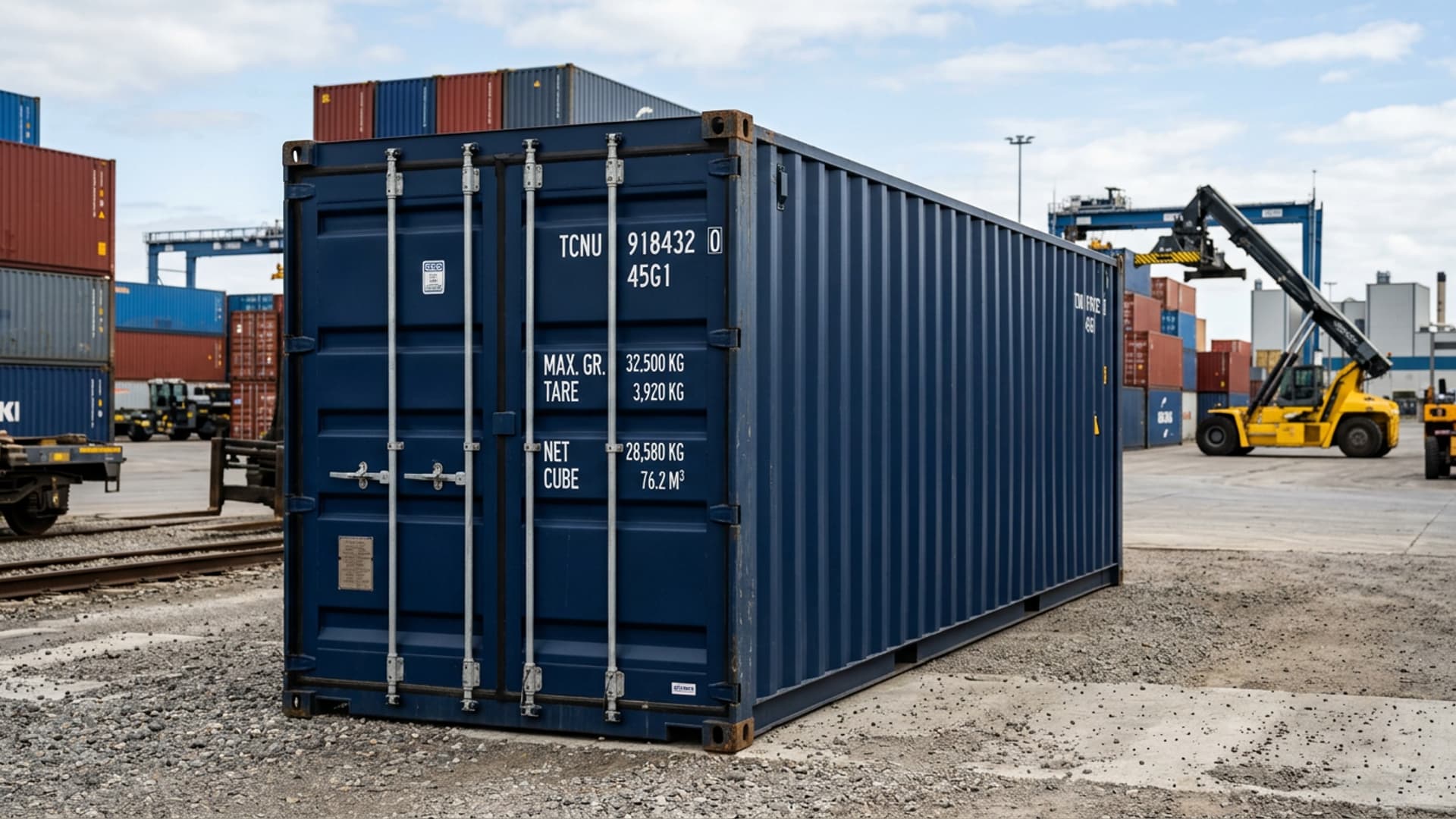
One-trip containers: prices and checks before buying
A one-trip container is sold after its first journey. It can provide a relatively recent unit for storage or conversion, with possible transport marks. Compare its actual condition and delivered cost with those of a new container or an inspected used unit.
One-trip container prices by size
Compare the delivered price of equivalent units. The difference from new varies with stock, configuration and the commercial definition used in each offer.
| Format | One-trip | Confirm in the quote |
|---|---|---|
| 20ft dry | £1,607 – £3,071 | Floor condition and departure location |
| 40ft dry | £1,958 – £3,780 | Site access and unloading |
| 40ft High Cube | £2,109 – £4,253 | Usable height and door opening |
| 20ft refrigerated | £3,765 – £7,875 | Refrigeration unit and operating checks |
| 40ft refrigerated | £5,020 – £13,388 | Standard or High Cube version and power supply |
Indicative prices excluding VAT, delivery, unloading and options. For reefers, specify the refrigeration unit, checks and included equipment.
One-trip, new and used: understanding the terms
A one-trip container is offered after its first journey rather than after extended use. The number of journeys and physical condition are separate facts: scratches, dents or repairs should be described even on a recent unit.
Suppliers sometimes use “new” and “one-trip” for the same commercial category. Have the quote specify the definition used, the container number and the known history. Fresh paint or a manufacturing date alone cannot establish the number of journeys.
5 checks to request from the seller
These points help link the offer to a specific unit and check its condition. They supplement the stated history; appearance alone does not prove that a container has made only one journey.
1. Identify the container offered
Ask for the identification number and a photo of the markings and plate. Check that these match the unit listed in the quote or that replacement terms are specified.
2. Ask for the known history
Ask what the seller can confirm about the first journey, manufacturing date and arrival at the depot. Distinguish documented information from statements without supporting documents.
3. Get recent photos
Ask for photos of all sides, the interior, floor and doors of the actual unit offered. A catalogue image cannot show its dents, scratches or possible repairs.
4. Check doors, seals and floor
Check opening and closing, latches, seals and floor condition. Ask the seller to disclose stiff operation, visible defects, odours or signs of moisture. Door operation cannot tell you the number of journeys.
5. Put handover terms in writing
Specify the included repairs, equipment, warranties and delivery services. Agree on the procedure if the unit handed over does not match the offer’s description and photos.
On receipt, check the container number against your documents, inspect accessible sides and try the doors if conditions allow. Photograph discrepancies and report them using the procedure agreed with the seller.
Frequently Asked Questions
What is a one-trip container?+
It is a commercial designation for a container sold after its first journey. It describes the stated history but does not guarantee a mark-free finish. Request a description and recent photos of the actual unit offered.
How does it differ from a new container?+
A one-trip container has already been used for transport. Some suppliers still describe it as new. To compare offers, ask whether the unit is unused from the factory or has made a first journey, then check the equipment, condition and warranties.
How much can you save compared with new?+
No percentage applies to every offer. Compare the same size, configuration, warranties and delivered cost. If both sellers use “new” for a one-trip container, the price difference does not necessarily reflect a difference in condition.
Is a one-trip container suitable for storage or conversion?+
It can be suitable if its condition and dimensions meet your project’s needs. Check the floor, doors and height after insulation. For a conversion, have the relevant professional approve the chosen unit and planned work.
How can you distinguish a one-trip container from a grade A used container?+
Grade A describes a commercial condition based on the seller’s criteria; one-trip describes a stated history. Ask for both separately, along with the unit’s identification, photos and available documents. A recent appearance alone is not enough to decide.
Also worth seeing
20ft one-trip container
Prices, dimensions and the unit offered.
40ft one-trip container
Capacity, condition and delivery constraints.
One-trip High Cube
Compare usable height and equipment.
One-trip refrigerated container
Check the refrigeration unit and specify cooling needs.
Brand new container
Size, configuration and choosing between stock and an order.
Used container
Inspect a unit and compare commercial condition labels.
Guide: new vs used
Compare conditions for your project and budget.
Request an offer for a one-trip container
Specify the size, required condition and delivery location. Up to 5 quotes, subject to seller availability.