Tall item: check the door
Internal height alone is not enough. Measure the packaged item and the clearance needed to handle it.
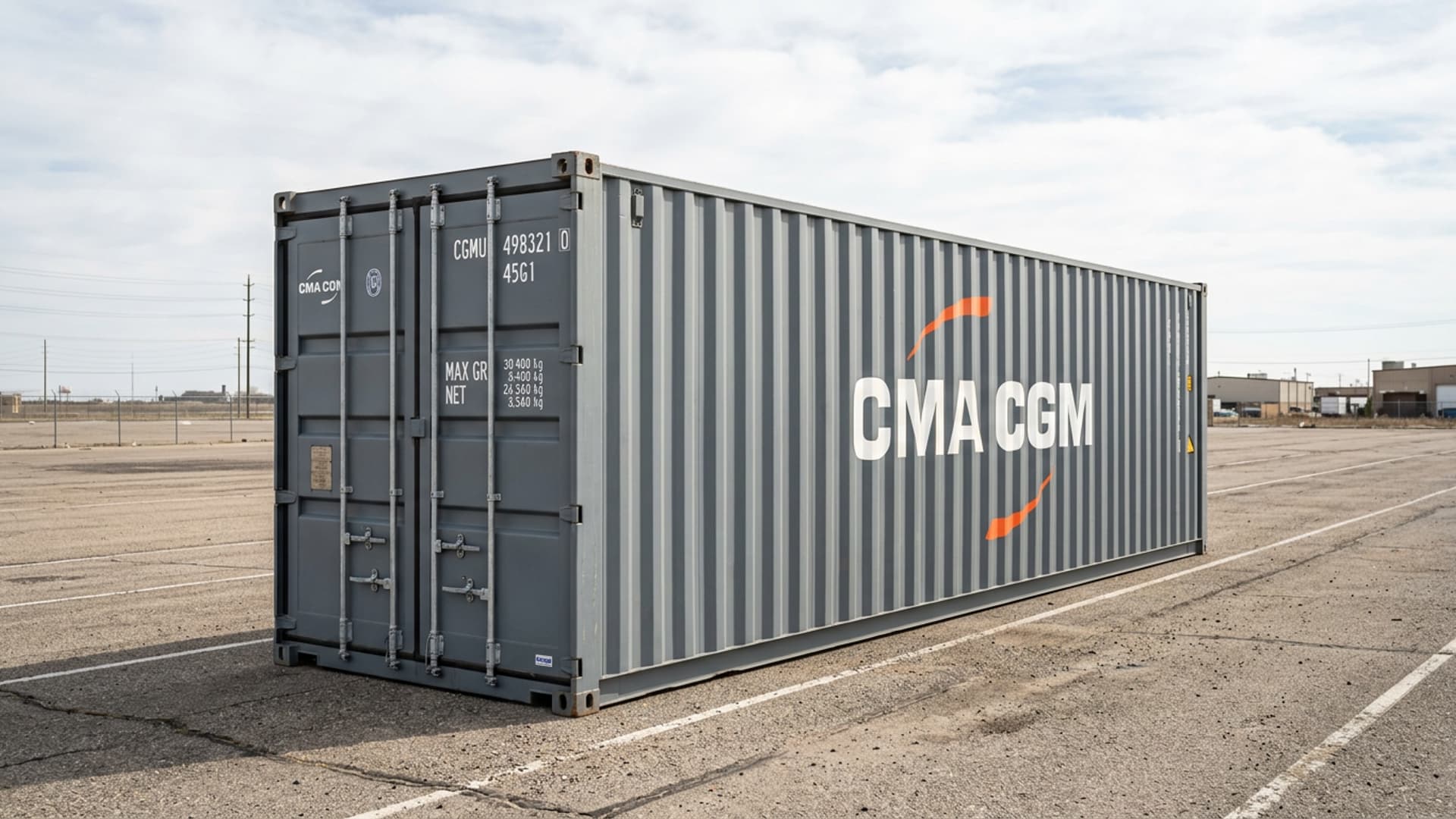
A 40ft High Cube is 2.896 m high (2.697 m inside), about 30 cm taller than a standard 40ft, giving around 76 m³ on the same floor area. Use the extra height for tall items or a conversion; a 45ft High Cube also adds length. Compare internal height, door clearance, condition and delivered cost before choosing.
Key specifications
| Specification | 40ft standard | 40ft HC | 45ft HC |
|---|---|---|---|
| External length | 12.192 m | 12.192 m | 13.716 m |
| External width | 2.438 m | 2.438 m | 2.438 m |
| External height | 2.591 m | 2.896 m | 2.896 m |
| Internal height | 2.390 m | 2.697 m | 2.697 m |
| Internal volume | 67 m³ | 76 m³ | 86 m³ |
| Internal floor area | 28.3 m² | 28.3 m² | 31.9 m² |
| Internal length | 12.032 m | 12.032 m | 13.556 m |
| Internal width | 2.352 m | 2.352 m | 2.352 m |
| Door opening (ONE example, W × H) | 2.340 × 2.280 m | 2.340 × 2.585 m | 2.340 × 2.585 m |
Used grades are defined by each seller, so compare units of the same size and equipment.
| Size and condition | Price excl. delivery |
|---|---|
| 40ft HC new | £2,259 – £4,883 |
| 40ft HC one-trip | £2,109 – £4,253 |
| 40ft HC used, Grade A | £1,607 – £3,308 |
| 40ft HC used, Grade B | £1,305 – £2,756 |
| 40ft HC used, Grade C | £1,054 – £2,284 |
| 45ft HC used, condition to be specified | £2,109 – £5,119 |
Transport and unloading: allow £420 – £1,155, to be confirmed depending on depot, distance and access. Ask for VAT, options and services to be itemised in the quote.
Add up the floor, ceiling and suspended equipment to calculate the clearance actually available.
Assumption: 100 mm floor + 100 mm ceiling.
Same indicative floor area: 28.3 m² for both 40ft containers.
This calculation is not an insulation specification. Actual layers, ventilation and the project’s rules need to be assessed separately.
Diagram calculated from the indicative heights in the table. Dimensions vary by unit; confirm those of the container offered.
Door dimensions: ONE specificationsInternal height alone is not enough. Measure the packaged item and the clearance needed to handle it.
HC adds vertical volume without adding floor area. Also check room to work or move around.
Check whether the extra length suits your storage, then request prices for access, transport and unloading.
Ask for a unit data sheet, photos and an itemised delivered quote.
Height. A High Cube is 2.896 m high outside and about 2.697 m inside, against 2.591 m and 2.390 m for a standard Dry. Length and width are identical (12.192 × 2.438 m) and the floor area stays close to 28.3 m². Check the dimensions of the unit offered.
It depends on your design. The example shown deducts 100 mm for the floor and 100 mm for the ceiling: 2,390 − 200 = 2,190 mm in a Dry, and 2,697 − 200 = 2,497 mm in a HC. This assumption is neither a recommended insulation specification nor a statement of residential compliance.
For goods or a layout that require more length. Indicative figures are 13.716 m externally, 13.556 m internally and around 86 m³. Check width, doors, condition and site access. Compare delivered quotes rather than applying a fixed premium over 40 ft.
For a 40ft, indicative prices excluding delivery are £2,259 – £4,883 new, £2,109 – £4,253 one-trip, £1,607 – £3,308 used Grade A, £1,305 – £2,756 Grade B and £1,054 – £2,284 Grade C. For a used 45ft: £2,109 – £5,119, condition to be specified. Add transport and unloading of around £420 – £1,155, to be confirmed in the quote with VAT and options.
Send the haulier photos of the access route and site. Ask them to check the loaded vehicle's height, the route, bends, obstacles and where the container will be placed. Also check that there will be enough room to open the doors and reach your goods.
For storage and transportation.
Tiny house, office, retail, pool.
Compact living: budget and key steps.
Temporary need? Compare monthly high cube hire rates from £75/month.
The longest high cube: 13.7 m, 86 m³.
Specify size, condition, required height and address. You may receive up to 5 quotes depending on available sellers.